Back to the article list
To the main page
Date: June 15th, 2024
Every year computer manufacturers come out with new products for the consumer market targetting various price segments. While the business and premium segment has seen significant improvements over the years (even if you don't agree with that!), the entry or budget market has been basically left out and has seen the quality of products decline. Yet, every year there is a segment of people who want or need to buy a new computer, most often a portable one due to their relative end-user simplicity. Most consumers in the end will be left with two choices:
Here another alternative comes in - refurbished business class laptops. Companies usually purchase business class laptops for their long-term support and more reliable construction, and when these laptops reach the end of life in the companies, they either go straight to a recycling center, straight to the mill for further material recycling or to other customers, such as ones specializing in refurbishment of used electronics. Typically, at this first link of the electronics revitalisation chain these machines go for very low prices, most often due to their used out internals, batteries and bodies. Refurbishers then give these machines another chance, this time being able to reach a private customer.
Refurbishing a laptop often involves changing old, worn out batteries into new batteries or batteries with very low wear, replacing thermal paste to ensure that the laptop won't overheat as easily, cleaning out the dust from the inside and other contaminants on the outer body, replacing other components such as disks, LCDs, ports, and testing of these machines. After all that, the machine is ready to be sold and reach a new owner. That way a person can receive a recycled computer, ready to be used reliably on daily tasks, such as browsing, document processing, video and audio consumption and more. On the higher end of the refurbished laptop spectrum one can even play more graphics-intensive video games, compile big heaps of code or edit photos and video when such a machine is bolstering a newer processor or a dedicated graphics processing unit (GPU). All this, when put in perspective of contemporary, newer laptops that might have been released last or this year, comes as a bargain with great value for the money.
While a new quality laptop can cost around 1000 Eur/USD and up, renewed machines can start at even 100 Eur/USD. Quite often a new laptop of the same price tag might actually have a weaker processor, fragile body and hard to repair internals that tend to break down if not taken very gentle care of it, while a refurbished business class laptop might still receive official support from the manufacturer, sometimes even with instructions on how to carry out small repairs. All that while staying not only economical, but also ecological by holding back from purchasing new but irrepairable machines that will quickly end up as useless e-waste.
Undoubtedly though while refurbished laptops offer a good bang for the buck, a potential buyer should also consider the cons of these machines. The biggest downside to a refurbished computer is, well, its age: such laptops can carry old, outdated and sometimes even obsolete processors which leaves such a laptop in dust when compared to a newer laptop of the same class. This can show up in slower performance, struggle to carry out some processor-demanding tasks and problems with higher resolution video playback. Though remediable, these things can leave some buyers doubtful about this kind of purchase. In addition, older laptops have a shorter battery life when compared to their latest counterparts. This is because of improvements in battery technology over the years and better integration of them with systems on board.
I think that refurbished laptops are a good deal and that most people should consider them not just for their great value for the money spent, but also because daily tasks can still be executed well with older machines, almost without any hiccups. It is noteworthy that such tasks usually include browsing the Internet, watching videos or listening to music and processing documents, sometimes with simultaneous browsing involved in the action. I would like to prove that point by using such machines myself.
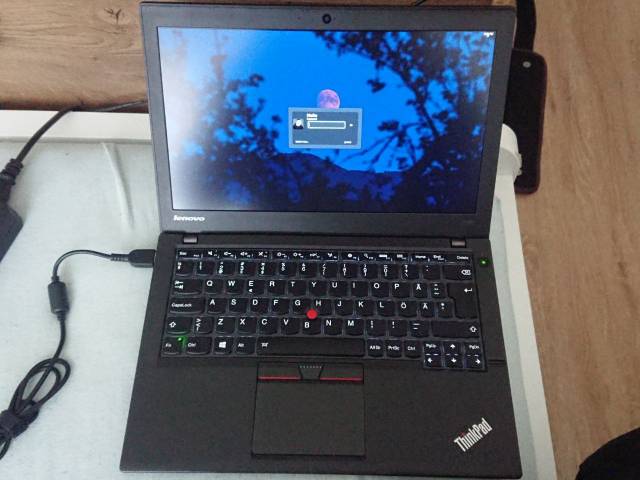
I'm going to use refurbished laptops, starting from ca. 2012 - 2013 (more than 10 years in 2024!) while trying out newer and newer laptops. I will include some basic benchmarks, opinions and reports on the performance while using the machine (both plugged and on battery) and other thoughts. As of the moment when writing this article, I am using such a machine - Lenovo Thinkpad X240. This will be the first laptop I will be reviewing soon. Notable is the fact, that though I want to write these reviews as neutral as possible, I am also involved in refurbishing these laptops, so take that as you will.